

Outside the copper-peptide class (the most common comparators are signaling peptides like Matrixyl (Pal-KTTKS), used as a topical anti-wrinkle ingredient) and broader regenerative peptides like BPC-157 and TB-500. The closest comparator within the copper-peptide category is AHK-Cu , alanyl-histidyl-lysine-copper,, a synthetic analogue that shows up in some hair-growth research. Pregnant and breastfeeding individuals — people under 18, those with active or suspected cancer, and those with copper metabolism disorders should avoid GHK-Cu products without physician supervision.
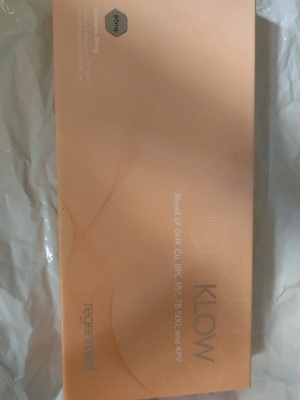
Most people run it for 8 to 12 weeks. Daily usage of GHK-Cu typically falls between 1 to 2 mg, often beginning at 1 mg and gradually increasing over a period of 4 to 8 weeks. To evaluate its effectiveness, dedicate yourself to the regimen, monitor your progress through photographs, and allow a timeframe of at least 3 to 6 months. Backed by decades of research, it boasts a safety profile that is among the cleanest in its category. Additionally (they offer BPC-157), TB-500, and the pre-mixed GLOW and KLOW for those establishing a more comprehensive recovery plan. For systemic effects — vials provide benefits that serums cannot achieve.
GHK-Cu is discussed for skin, hair, and tissue-repair uses, but evidence and risk differ by route and finished product. These mechanistic observations do not demonstrate clinical rejuvenation or establish an injectable benefit. Cell and animal studies have examined collagen-related signaling, decorin, and enzymes involved in tissue remodeling. It does not establish that a research powder is suitable for injection or that adding it to a cream creates a safe, stable topical product. Allow separately for losses (extra single-use supplies), and product-specific discard dates.
On the other end, a deep or dark blue solution, visible particles, or anything cloudy also means something is wrong. GHK-Cu is one of the most consistently reported peptides for injection-site reactions — and copper is a recognised mast-cell trigger. For scale, cosmetic preparations generally run 0.2 – 2%, and the 0.2 – 3% you see quoted is anecdotal compounding practice for alopecia rather than a studied dose. There is no human data past about three months for GHK-Cu by any route, and none for chronic subcutaneous use. No controlled trial has reported a GHK-Cu outcome at the four-to-eight week mark by any route, injected or topical.
Storage, Handling and Injection of GHK-Cu
In injectable formats — the size of the vial and the volume for reconstitution dictate all calculations for doses. A reconstituted vial should never be frozen, shaking is prohibited , a gentle swirl is advised,, and it must be discarded if the blue hue fades, darkens significantly, or if any particles are visible in the solution. Generally, suggested mechanisms of copper peptides involve the promotion of fibroblast proliferation and the inhibition of TGF-β1, which is often overexpressed in genetic hair loss.
The injection itself is close to painless with a fine, short insulin syringe (29 to 31 gauge). For a 50mg vial (adding 2mL of bacteriostatic water gives you 25mg/mL), so 1mg is 0.04mL, or 4 units on a standard insulin syringe, and a 2mg dose is 8 units. On cycling, some practitioners run 8 to 12 weeks on and 4 weeks off to head off any adaptation. Plenty of people run GHK-Cu alongside minoxidil , Rogaine,.
Most charts assume one vial size and one water amount. A 15-unit draw of either blend holds 2.5 mg of GHK-Cu — which is in the same range as a standalone run. Running them separately lets you set each amount on its own, which a blend does not. GHK-Cu is sold on its own and as the largest component of two blends. Those are not interchangeable, and an amount reported for one form says nothing reliable about another. Those are mechanisms, not measured outcomes in healthy people.
There are no published human studies of GHK-Cu during pregnancy or breastfeeding — and none of long-term systemic use. No study has measured how research-chemical GHK-Cu affects copper balance in people. People with Wilson’s disease or other copper metabolism disorders cannot clear copper normally, which makes added copper a particular risk for them.
Most people searching for “copper peptide” arrive from skincare content, serums, creams, “copper peptides for wrinkles.” That is a legitimate and (in fact), the best-evidenced use of GHK-Cu. Because GHK-Cu’s studied role is tissue remodeling while GH secretagogues drive systemic growth and recovery signaling, some protocols consider them complementary, the theory being that GH peptides support the anabolic environment while GHK-Cu supports the local repair matrix. There is no established maximum number of cycles, but ongoing use should be paired with periodic reassessment of goals, side effects, and, where clinically indicated — copper and related mineral status. This ramp lets the body acclimate to a lower copper load first, then steps up once tolerance is established. A 2020 review concluded that the existing data justifies further preclinical and clinical aging studies rather than confirming established efficacy. Topical GHK-Cu is well established and regulated as a cosmetic ingredient, and the human studies summarized on this page used topical products or wound dressings.
Typically — after the initial adaptation period, researchers transition into a maintenance regimen. Some individuals may experience skin flushing or warmth at the sites of injection. This gradual method enables researchers to evaluate tolerance levels effectively.
The FDA also indicates that GHK-Cu injections prepared by a pharmacy may pose a risk of an immune response. A review from 2018 highlights cream studies conducted over 12 weeks, including one where the cream was applied twice daily. We have not located any published research regarding GHK-Cu during pregnancy or lactation. Over 6 months, average hair count rose 52.6 and 71.5 in the two product groups, and 9.6 on placebo. A combination product was tested in a trial involving participants.
This page is reference material, not medical advice. Add the unregulated supply chain, and injected GHK-Cu combines an unstudied route with an unverified product and a mineral that has a real ceiling. There is a separate literature on copper peptide dressings and formulations for wound healing, which is more clinically oriented but again does not translate into a general-purpose dose.
None of the components are FDA approved, and the blend has never been studied as a fixed combination in published clinical trials. Where a value is not established in people, this table says so rather than filling the box. FDA identifies potential immunogenicity and peptide-impurity risks; no safe injection range is established. No validated injectable benefit-risk profile is established. Clinical evidence has not established whether breaks reduce risk or improve outcomes.
Where is the human evidence strongest?
Dosing figures cited below come directly from published laboratory and clinical literature – they do not represent a recommendation of any kind. This article summarises published preclinical and clinical research on GHK-Cu for informational purposes. GHK-Cu is one of the most extensively researched peptides in skin biology – a naturally occurring tripeptide-copper complex with documented effects on collagen synthesis (wound healing), hair growth, and gene expression in ageing tissue. For the full research guide (every cited protocol and the other vial sizes), see the main GHK-Cu page.